
ASTM C1193-25: A Practical Guide to Building Joint Sealants, Design, Installation, and Long-Term Performance
Design, substrate preparation, installation, inspection and maintenance of building joint sealants.
Introduction
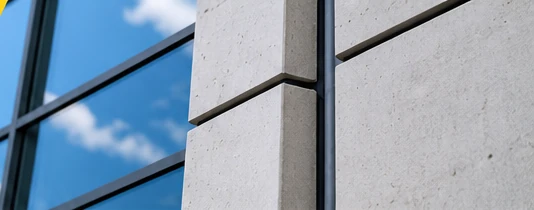
Building joint sealants are often treated as a relatively small component of a construction system. In reality, they play a critical role in protecting buildings against water penetration, air leakage, movement, weathering, and premature deterioration of adjacent materials. ASTM C1193-25, Standard Guide for Use of Joint Sealants, provides guidance for the selection, design, preparation, installation, inspection, and maintenance of joint sealants.
The standard focuses primarily on cold liquid-applied sealants used in building construction and related applications. The central message is simple: the performance of a sealant joint depends on much more than the sealant itself. Joint geometry, substrate condition, compatibility, primer, backer materials, environmental conditions, installation quality, and movement during curing all contribute to final performance.
1. Sealant Performance Starts With Joint Design
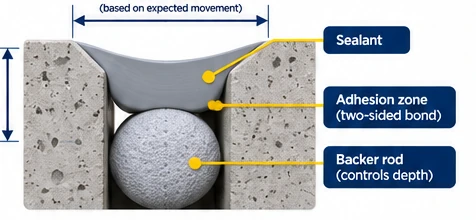
A sealant cannot compensate for poor joint design. Before selecting a product, the joint should be evaluated in terms of expected movement, dimensions, substrate, environmental exposure, and service conditions. Building joints may move because of thermal expansion and contraction, moisture-related movement, wind and structural movement, loads, concrete shrinkage and creep, frame shortening, construction tolerances, and differential movement between adjacent materials.
Joint width and sealant depth must be designed to accommodate expected movement without overstressing the sealant or substrates. ASTM C1193 generally recommends a minimum sealant adhesion depth of approximately 6 mm unless the manufacturer specifies otherwise. Joint width should be determined from expected movement and the selected sealant's movement capability.
A practical design should include a safety margin rather than relying continuously on the maximum laboratory movement capability.
2. The Importance Of The Substrate
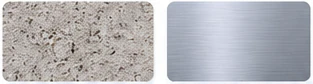
Even a high-performance sealant can fail when applied to a poorly prepared substrate. Before installation, substrates should be clean, dry, sound, and free from dust, loose particles, oil, grease, frost, and contamination. Porous substrates such as concrete, masonry, brick, and some stones may contain laitance, form-release agents, water-repellent treatments, or dust.
Nonporous substrates such as glass, stainless steel, aluminum, and coated metals can also present problems because of coatings, anodizing, oxidation, or manufacturing residues. Compatibility and adhesion should not simply be assumed from the material name. Representative materials from the actual project should be tested where different coatings, finishes, or proprietary materials are involved.
3. Cleaning And Priming
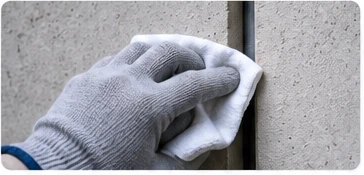
Proper cleaning is one of the most important steps in sealant installation. Porous substrates may require brushing, grinding, abrasion, or appropriate air cleaning. Solvents should not automatically be used on porous materials because they can dissolve contaminants and drive them deeper into the substrate.
For nonporous substrates, the appropriate cleaning system specified by the sealant manufacturer should be used. The two-cloth method is particularly important: the first cloth removes contaminants with the appropriate solvent, while a second clean cloth removes dissolved contamination before evaporation. Primer is not universally required.
Its use depends on the sealant, substrate, and manufacturer's recommendations. When required, primer can improve adhesion and long-term adhesion durability. It must be applied correctly and allowed to dry for the specified period.
4. Backer Rod And Bond Breakers
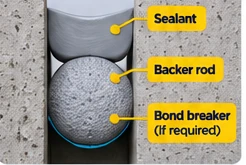
Backer materials are important components of the joint system. They control sealant depth, help establish the joint profile, support tooling, and prevent unwanted three-sided adhesion. Common backer materials include open-cell, closed-cell, and bicellular products.
Selection depends on joint orientation, water exposure, substrate geometry, compatibility, and sealant properties. Backer materials should be installed without puncturing, cutting, stretching, twisting, or damaging them. Damaged backer material may cause outgassing, voids, or other defects.
A bond breaker is used where adhesion to the third side of the joint would be detrimental. Preventing three-sided adhesion is particularly important in movement joints because the sealant must deform freely. The objective is generally to create a two-sided bond.
5. Sealant Selection And Movement Capability
ASTM C1193 covers several types of liquid-applied sealants, including single-component and multi-component systems, as well as non-sag and self-leveling products. Single-component sealants are generally ready to use and often cure through atmospheric moisture, so curing can be slower in very dry environments. Multi-component sealants are mixed before application and can cure faster, but incorrect mixing can cause incomplete cure, reduced performance, or air entrapment.
ASTM C719 is commonly used to evaluate movement capability. A movement classification should not be interpreted as a guarantee that the same percentage of movement can be safely accommodated indefinitely in a real building. Sealant modulus is also important.
Low-modulus sealants generally impose lower stresses on adjacent substrates and can be useful where movement is significant. The correct product is not necessarily the sealant with the highest movement rating; selection should be based on the complete joint system and service conditions.
6. Movement During Cure
Sealants do not immediately achieve their final mechanical properties after installation. During curing, the joint may expand or contract because of temperature, solar radiation, moisture, or structural movement. If significant movement occurs before sufficient cure, final movement capability can be reduced.
Possible damage includes adhesive failure, cohesive failure, cracking, wrinkling, bulging, voids, and permanent deformation. This is particularly important on façades exposed to direct solar radiation. Dark-colored materials can reach temperatures substantially higher than surrounding air and create significant thermal movement.
Risk can be reduced by considering installation timing, shade, ambient and substrate temperatures, cure rate, and faster-curing systems where appropriate. Where large movement is expected during installation, precured sealants may provide a more reliable solution.
7. Installation Quality
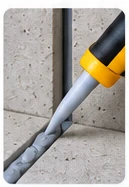
Many sealant failures are caused not by defective materials but by poor installation. A typical sequence includes joint inspection; verification of dimensions and tolerances; surface preparation; adhesion and compatibility testing where required; cleaning; primer application when required; backer or bond-breaker installation; sealant application; tooling; cleanup; and quality-control inspection. Sealant should fully contact the intended bonding surfaces.
Voids and air pockets must be avoided. The nozzle should be appropriate for joint dimensions, and sealant should be tooled promptly before significant curing. Proper tooling forces sealant against the substrates, eliminates voids, and establishes the desired profile.
For many movement joints, a concave profile is preferred because it helps distribute deformation through the sealant rather than concentrating stress at the bond line.
8. Environmental Conditions
Sealant installation should be planned around actual environmental conditions. Low temperatures can reduce adhesion, slow curing, increase viscosity, and make extrusion and tooling difficult. Frost and invisible surface moisture can cause serious adhesion problems.
High substrate temperatures can accelerate curing and shorten working time. Solar heating can increase movement during curing. Rain and wet substrates can interfere with adhesion and curing.
Exterior sealant work should therefore not normally be performed during rain or on wet surfaces unless the selected system is specifically designed and approved for such conditions. Environmental conditions should be evaluated at the substrate, not only from air temperature.
9. Inspection, Testing, And Quality Control
Laboratory testing does not eliminate the need for field quality control. Representative project materials should be evaluated for adhesion, compatibility, staining potential, joint movement, primer requirements, and backer compatibility. ASTM C1521 provides guidance for evaluating adhesion of installed sealants in the field.
Field testing is particularly important when materials differ from those previously tested, when coatings or finishes are involved, or when proprietary façade components are used. Quality control should continue throughout installation rather than being performed only at the beginning.
10. Long-Term Maintenance
Sealant joints should be treated as maintainable building components. UV radiation, temperature fluctuations, moisture, pollution, movement, and cleaning chemicals can gradually affect performance. Regular inspection can identify loss of adhesion, cracking, cohesive failure, hardening or softening, staining, loss of elasticity, joint deformation, and water-related deterioration.
Early identification of defects can prevent localized failure from developing into extensive damage to adjacent façade materials. Building owners should maintain records of sealant products, primers, joint details, installation procedures, repairs, and replacement history.
Conclusion
ASTM C1193-25 demonstrates that successful sealant performance is fundamentally a system-design and installation issue, not simply a product-selection issue. A durable joint requires proper joint design, a suitable sealant, compatible substrates, effective cleaning, correct primer, appropriate backer material, controlled installation, proper tooling, environmental control, quality assurance, and long-term maintenance. For engineers, architects, façade specialists, contractors, and building owners, the practical lesson is clear: a sealant joint should be designed, installed, inspected, and maintained as an integrated building system.